I did all my config over USB Serial Terminal, and did reset all settings from there Using TILT was set to off before reset. I will manually set it to 0 and repeat my outdoor tests in an hour. I plan on doing coldboot ups and test about 5-6 times today, and tomorrow. And then head to the woods on the weekend (In Bright Orange so my buddies don’t shoot me !! 
@ChrisO , I also suggest to consider adjusting those NMEA message rates, especially GSV.
These are where I landed for my Torch and PP RTCM NTRIP over BLE :
Menu: Message NMEA
1) Message GPDTM: 0
2) Message GPGBS: 0
3) Message GPGGA: 1 (could be faster if you wish)
4) Message GPGLL: 0
5) Message GPGNS: 0
6) Message GPGRS: 0
7) Message GPGSA: 0
8) Message GPGST: 4  ( <5 keeps most Apps happy reporting the RTK residuals)
9) Message GPGSV: 10 ( this one is the bandwidth HOG ! )
10) Message GPRMC: 1
11) Message GPROT: 0
12) Message GPTHS: 0
13) Message GPVTG: 0
14) Message GPZDA: 0
I “think” you might be pushing NTRIP over WiFi, so this might not be as beneficial for you. But I’ve had better luck with maintaining 1 comm connection to the device verses 2.
My RTK Torch is connected to Android Tablet /SW MAPS via Bluetooth. I do check on system messages from Torch to Android Tablet via USB cord and serial terminal. The Torch is connected to my iPhone over WiFi for Internet Access.
And for these quick tests - I am not connecting the Serial port to see log messages unless there is a problem…. which for today so far…. NO PROBLEMS!!! YEAH!!!
This is what Serial Port shows before I make any changes (after Factory Reset)
enu: Instrument Setup
Combined Height of Instrument: 1.917m
- Set Antenna Height (a.k.a. Pole Length): 1.800m
- Set Antenna Phase Center (a.k.a. ARP): 116.5mm
- Report Tip Altitude: Disabled
- Tilt Compensation: Enabled
x) Exit
I am going to set #3 Report Tip Altitude to ENABLED
…. ok ODD Behavior, after taking that screen capture I never hit (4) to enable, and it enabled itself??? See key presses below….
SparkFun RTK Torch v2.2
** Bluetooth SPP and BLE broadcasting as: Torch Rover-7CC2 **
Menu: Main
- Configure GNSS Receiver
- Configure GNSS Messages
- Configure Base
- Configure Ports
- Configure WiFi
- Configure TCP/UDP
f) Firmware Update
i) Configure Corrections Priorities
p) Configure PointPerfect
r) Configure Radios
s) Configure System
t) Configure Instrument Setup
u) Configure User Profiles
+) Enter Command line mode
x) Exit
t
Menu: Instrument Setup
Combined Height of Instrument: 1.917m
- Set Antenna Height (a.k.a. Pole Length): 1.800m
- Set Antenna Phase Center (a.k.a. ARP): 116.5mm
- Report Tip Altitude: Disabled
- Tilt Compensation: Enabled
x) Exit
x
Menu: Instrument Setup
Combined Height of Instrument: 1.917m
- Set Antenna Height (a.k.a. Pole Length): 1.800m
- Set Antenna Phase Center (a.k.a. ARP): 116.5mm
- Report Tip Altitude: Enabled
- Tilt Compensation: Enabled
x) Exit
x
SparkFun RTK Torch v2.2
** Bluetooth SPP and BLE broadcasting as: Torch Rover-7CC2 **
Menu: Main
- Configure GNSS Receiver
- Configure GNSS Messages
- Configure Base
- Configure Ports
- Configure WiFi
- Configure TCP/UDP
f) Firmware Update
i) Configure Corrections Priorities
p) Configure PointPerfect
r) Configure Radios
s) Configure System
t) Configure Instrument Setup
u) Configure User Profiles
+) Enter Command line mode
x) Exit
t
Menu: Instrument Setup
Combined Height of Instrument: 1.917m
- Set Antenna Height (a.k.a. Pole Length): 1.800m
- Set Antenna Phase Center (a.k.a. ARP): 116.5mm
- Report Tip Altitude: Enabled
- Tilt Compensation: Enabled
x) Exit
I am going to set pole length to 3M as I am using a 3 meter pole
Testing continues to exceed expectations. Here is the ChatGPT analysis of 3 Segments measured (3rd test of the day) My measurement with Milwaukee 300ft tape is 154’ and between 9-10 inches… the tape stretches a bit… call it 154.89ft
CHATGPT analysis
Since you provided projected X/Y coordinates in meters, the cleanest and most accurate way is to compute straight-line (planar) distances from those values. I’ve done that below.
 Distances Between Paired Readings
ID 1 → ID 2
-
Distance: 47.185 m
-
Distance: 154.81 ft
ID 3 → ID 4
-
Distance: 47.217 m
-
Distance: 154.92 ft
ID 5 → ID 6
-
Distance: 47.200 m
-
Distance: 154.86 ft
 Summary
| Pair | Distance (m) | Distance (ft) |
|---|---|---|
| 1 → 2 | 47.185 m | 154.81 ft |
| 3 → 4 | 47.217 m | 154.92 ft |
| 5 → 6 | 47.200 m | 154.86 ft |
Observations
-
All three measurements agree within ±3 cm, which is excellent repeatability.
-
This aligns well with your reported horizontal accuracy (~9–10 mm) and low HDOP (~0.5).
-
Your return-to-start readings (IDs 1, 3, 5) are extremely consistent — good indication of stable GNSS conditions.
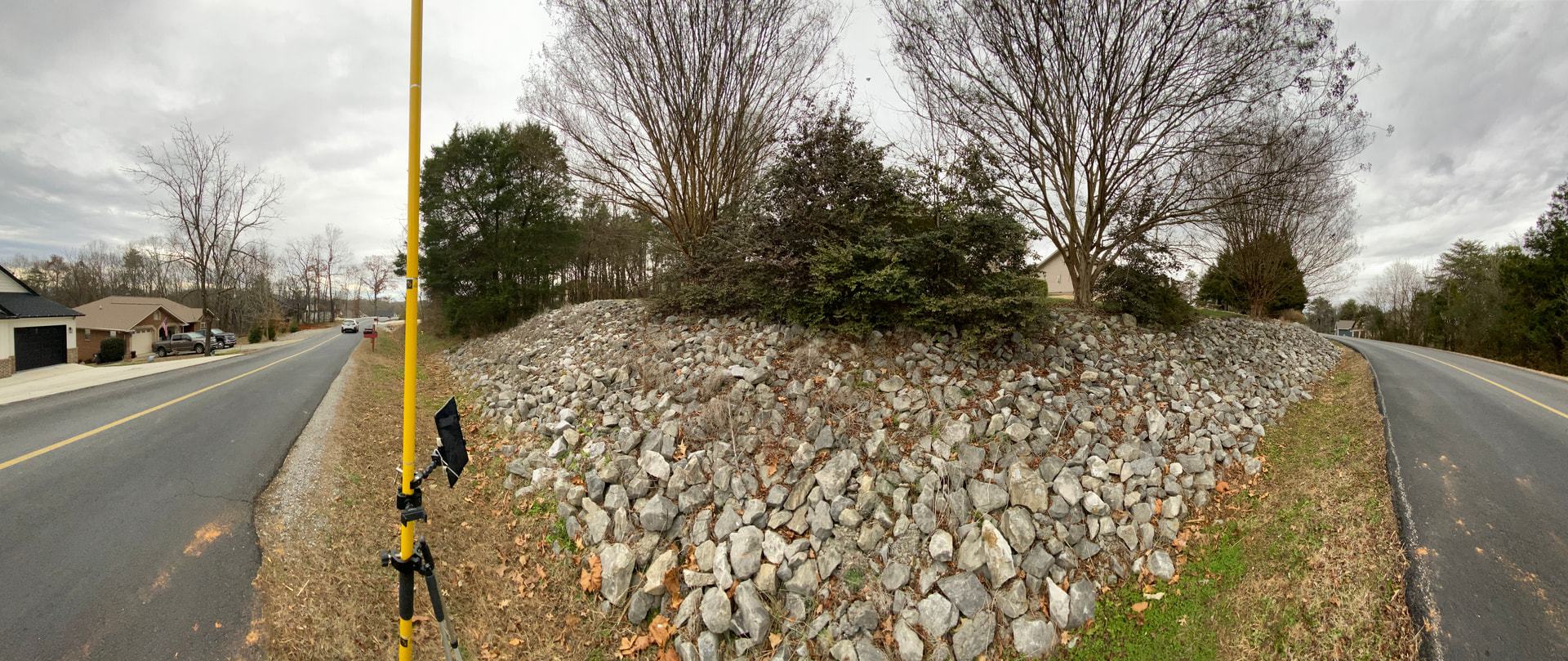
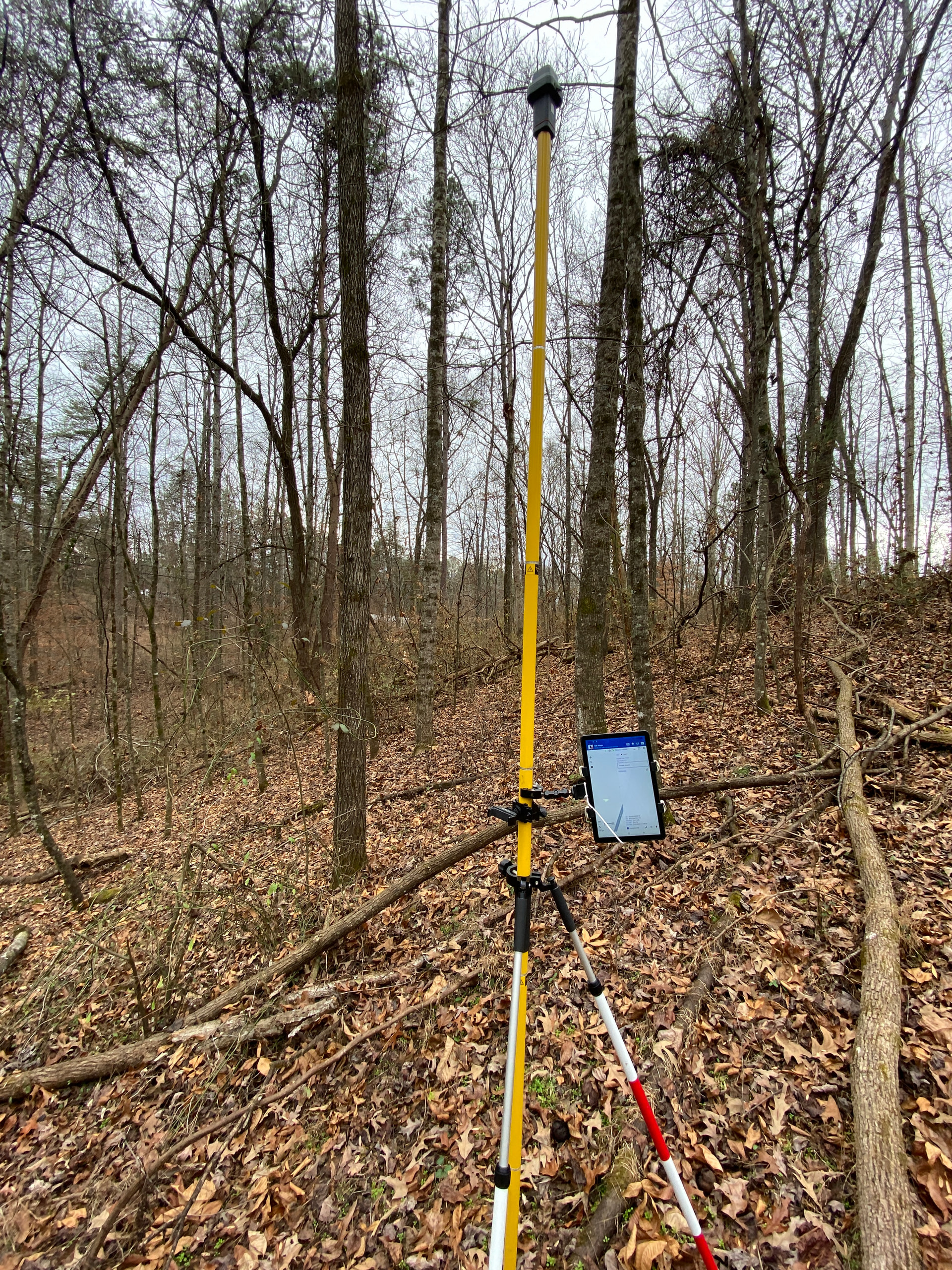
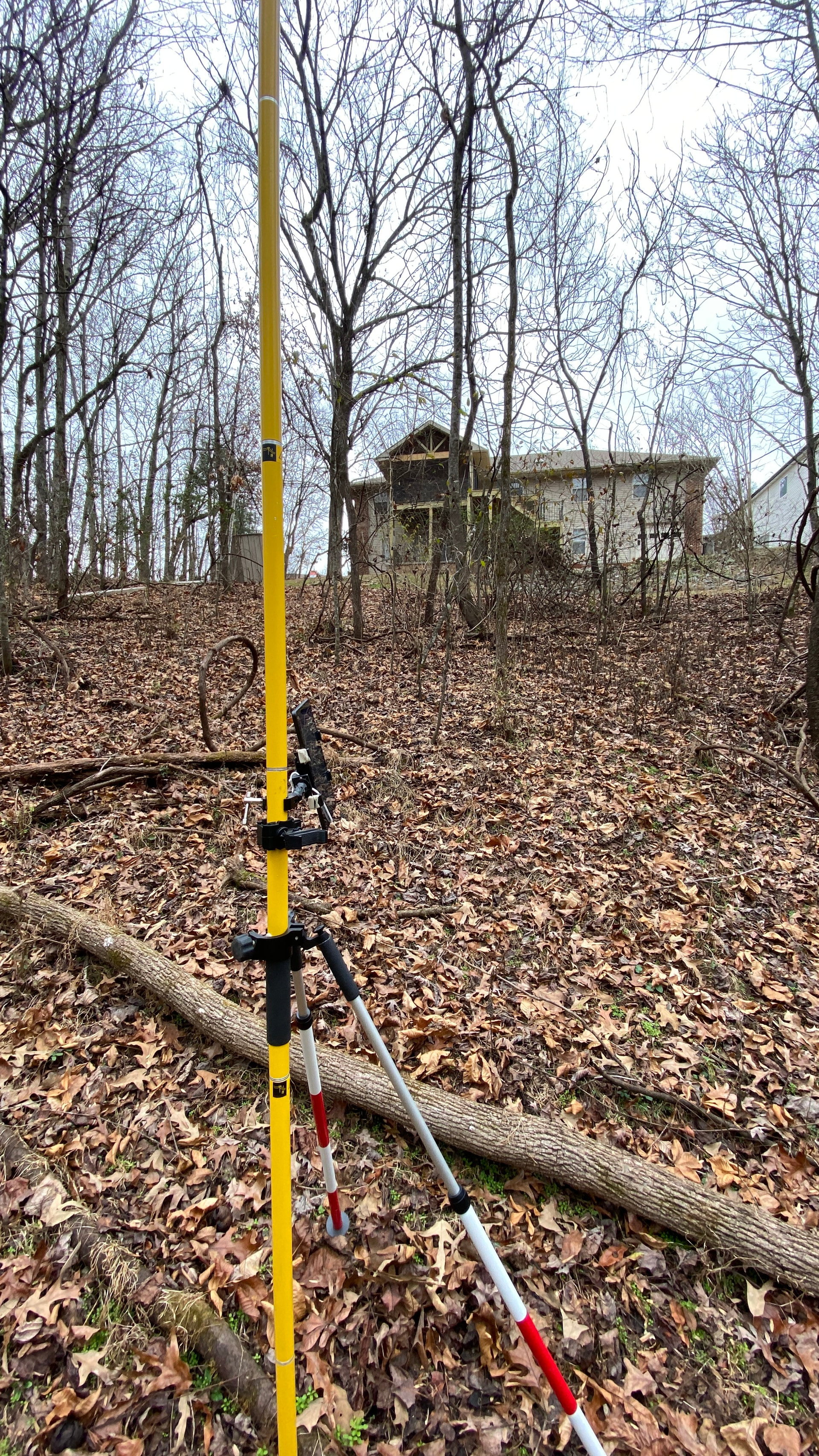
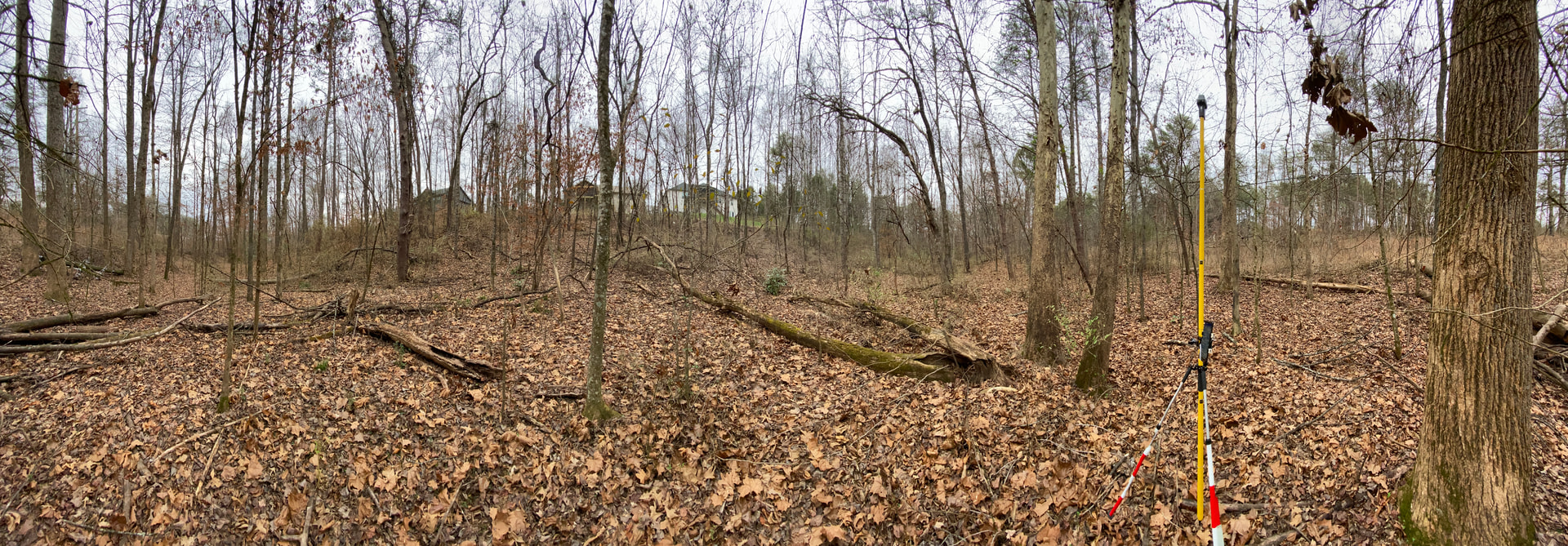
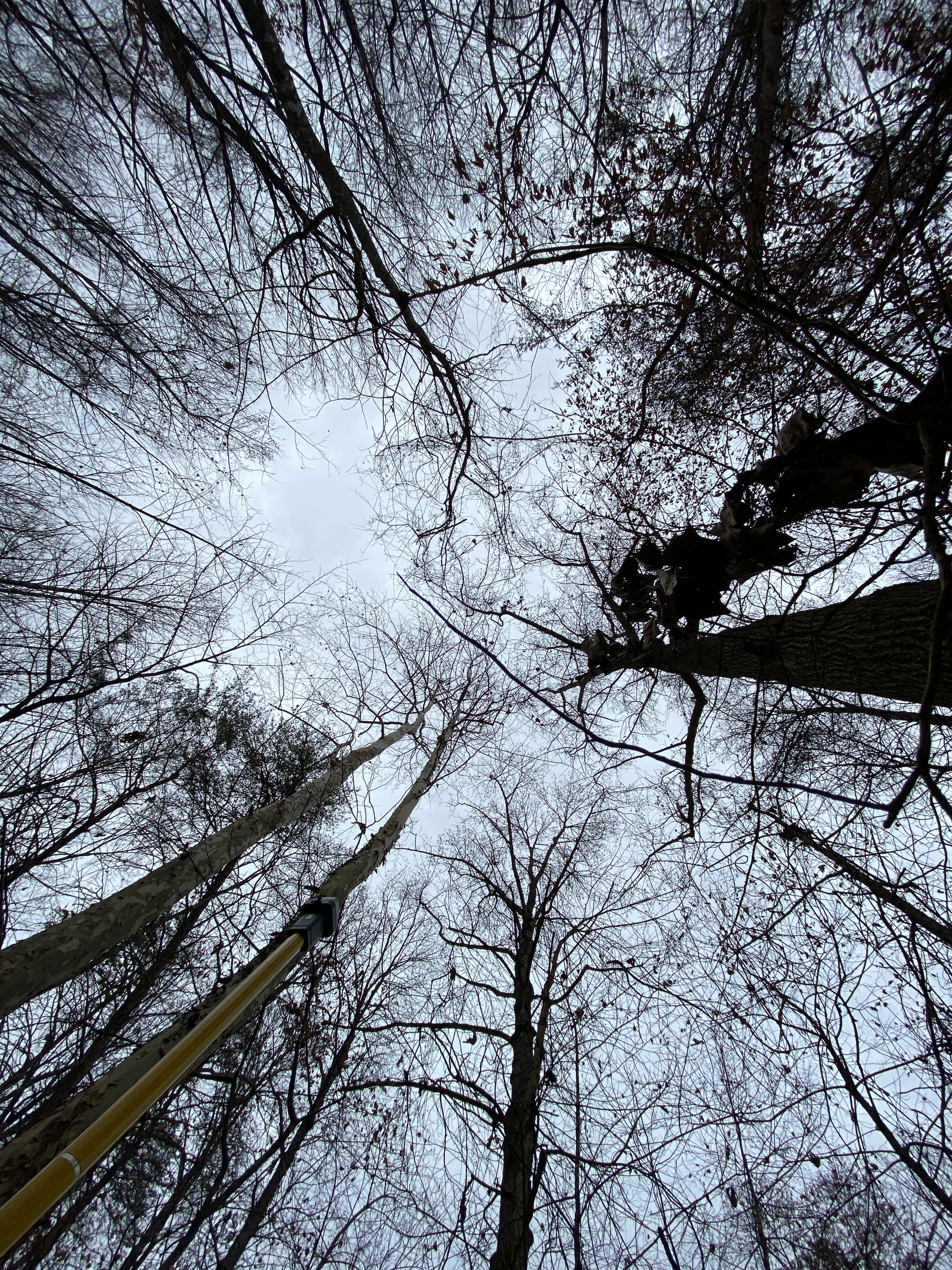
Maybe I’m missing it, but I don’t see a bubble level on the rod ?
You should be able to get well under the reported ±3 cm with the rod plumb and turn-off tilt compensation.
There is a bubble level just under the clamp for the legs. I have Tilt Compensation ON (in my past failures months ago I had Tilt comp OFF) however the Tilt compensation doesn’t appear to be working. If I radically tilt to move the head 2ft off point, SW MAPS reports I moved 2ft. The tip is still at exact same point. And Torch is set to reflect 3m pole…. but at this point, that is a really minor issue…. I am actually getting RTK FIX!!! FINALLY
And I was actually pondering shortening up the Survyors pole it’s 3 meters, I may reduce to 2m as if I am off with my Bubble Level a hair it’s moving the torch a lot more 3meters up vs 2m up….
Yes, a 3m pole is optimistic when you’re hopefully testing down to the mm resolution.
The best way I’ve found to truly test the NTRIP source and the device is to establish permanent threads somewhere handy (your yard, office, etc). That lets you log points over days/weeks to compare. Export the points from SW Maps with UTM selected (link to a previous post).
Then ChatGPT can make you a fancy 3D plot in seconds:
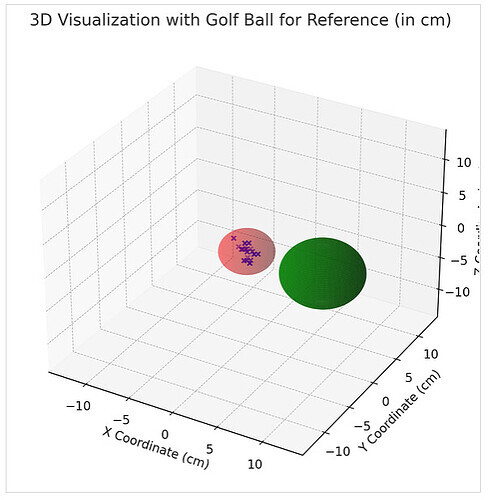
Don’t bother with Averaging in SW Maps while you are collecting. Performing more measurements under different conditions (days) is what makes me start to trust the entire System, not collecting more data under the same conditions.
This is how you can gain (or lose) confidence in your particular System/Setup/Workflow.
Also, I always recommend 15 & 30 for Elevation Mask and carrier/noise ratio as a starting point, but don’t be afraid to go even higher:
minCNO=10  [ use 30+]
minElev=10 [ use 15+]
Have fun with PP RTCM 
Excuse my ignorance, but when you say don’t bother with Averaging in SW Map, do you mean, take your time, get the pole really perfectly vertical with your best human precision, and just collect one point. And then just repeat that over a month (once a day, various times during the day) and then compare all 30 points (29 or 31 points/days) collected to see how close they are to each other?
Thursday December 18, 2025 - last test of the day, did 4 segment tests on my 154.8xft test bed
Turned off All Tilt
Menu: Instrument Setup
Combined Height of Instrument: 2.116m
- Set Antenna Height (a.k.a. Pole Length): 2.000m
- Set Antenna Phase Center (a.k.a. ARP): 116.5mm
- Report Tip Altitude: Disabled
- Tilt Compensation: Disabled
x) Exit
x
I haven’t made @rftop Ryan’s suggested changes yet as I don’t want to change too many variables at one time.
Here’s what ChatGPT had to say… I should check with Claude also, he is better at math supposedly…..
Perfect — same method as before, using the projected X/Y coordinates (meters) for precise planar distances.
Distances Between Paired Readings (4 Segments)
ID 1 → ID 2
-
Distance: 47.205 m
-
Distance: 154.87 ft
ID 3 → ID 4
-
Distance: 47.214 m
-
Distance: 154.90 ft
ID 5 → ID 6
-
Distance: 47.216 m
-
Distance: 154.91 ft
ID 7 → ID 8
-
Distance: 47.198 m
-
Distance: 154.85 ft
 Summary Table
| Pair | Distance (m) | Distance (ft) |
|---|---|---|
| 1 → 2 | 47.205 | 154.87 |
| 3 → 4 | 47.214 | 154.90 |
| 5 → 6 | 47.216 | 154.91 |
| 7 → 8 | 47.198 | 154.85 |
 Statistical Consistency
-
Mean distance: 47.209 m (154.88 ft)
-
Max spread: ±9 mm
-
Total range: 18 mm (0.059 ft)
What this tells us
-
Repeatability is excellent — tighter than your already-good first test.
-
Low HDOP (0.5–0.6) and PDOP (~0.9–1.1) are clearly reflected in the results.
-
The “return-to-start” points (mb1, mb3, mb5, mb7) cluster extremely well, indicating minimal drift over ~25 minutes.
From a survey perspective, this baseline is behaving like a short RTK control line rather than consumer-grade GNSS.
For comparison, here is what Claude did with the SW MAPS Export The prompt and the results. I just cut & pasted the XLS export from SW Maps after the prompt
I am testing my Sparkfun RTK Torch GNSS Surveyors GPS I took a series of 8 readings of four segments. I was repeating from a fixed point to a second fixed point, and just repeated it four times, taking 8 readings. Segment 1 to 2, then 3 to 4, and 5 to 6 and 7 to 8. 1, 3, 5, 7 were at the exact same location, and 2, 4, 6, 8 were at the end of the segment and at the exact same point. These were the exported GPS readings, how long were the segments, how much variation was there between the segments, and between the readings at the two different points?
I’ll analyze your RTK GPS test data to calculate segment lengths and variations.
Segment Lengths
All four segments measured nearly identical distances:
| Segment | Horizontal Distance | 3D Distance | Elevation Change |
|---|---|---|---|
| 1→2 | 48.84 m | 48.88 m | +1.892 m |
| 3→4 | 48.84 m | 48.88 m | +1.992 m |
| 5→6 | 48.83 m | 48.87 m | +1.965 m |
| 7→8 | 48.84 m | 48.87 m | +1.937 m |
Average segment length: 48.84 m horizontally, 48.87 m in 3D
Variation Between Segments
The repeatability is excellent:
-
Horizontal distance variation: ±0.01 m (±0.02%)
-
3D distance variation: ±0.01 m (±0.02%)
-
Elevation change variation: ±0.05 m
Variation at Each Fixed Point
Start Point (readings 1, 3, 5, 7):
-
Horizontal spread: 0.020 m (20 mm)
-
Latitude range: 0.00000015° (0.017 m)
-
Longitude range: 0.00000024° (0.018 m)
-
Elevation range: 0.045 m (45 mm)
End Point (readings 2, 4, 6, 8):
-
Horizontal spread: 0.024 m (24 mm)
-
Latitude range: 0.00000020° (0.022 m)
-
Longitude range: 0.00000009° (0.007 m)
-
Elevation range: 0.011 m (11 mm)
Analysis
Your RTK Torch is performing excellently:
-
All horizontal accuracies were ≤1 cm (0.009-0.01 m)
-
All vertical accuracies were ≤3 cm (0.024-0.03 m)
-
Fix quality was RTK Fixed (Fix ID = 4) for all readings
-
28-31 satellites in use throughout
The 2 cm horizontal repeatability and sub-5 cm elevation repeatability demonstrate high-quality RTK performance, well within the specified accuracies of the device.
Correct…To test RTK performance, just use single epochs (don’t average several minutes with the Point Averaging function of SW Maps).
The key is a repeatable mount/threads for the Torch.
We focus on the precision (repeatability) of the entire system at a stable antenna position across the range of multiple days (satellite geometry, weather, atmospheric upsets, etc).
Multipath and low elevation birds contribute to poor vertical performance, and why Elevation Mask and carrier/noise ratio are so important if you are looking for sub-cm Quality Measurements.
[Edit] - I’d like to clarify these suggestions are for testing the System’s Precisions…not necessarily for everyday work depending on the environment. IE: If I needed RTK points in the woods like your photos, I would likely be OK with less precision in order to get the work completed. Poor GNSS environments sometimes require tradeoffs
What it was -
Menu: GNSS Messages
Active messages: 5
- Set NMEA Messages
- Set Rover RTCM Messages
- Set Base RTCM Messages
- Reset to Defaults
x) Exit
1
Menu: Message NMEA
- Message GPDTM: 0
- Message GPGBS: 0
- Message GPGGA: 0.5
- Message GPGLL: 0
- Message GPGNS: 0
- Message GPGRS: 0
- Message GPGSA: 0.5
- Message GPGST: 0.5
- Message GPGSV: 1
- Message GPRMC: 0.5
- Message GPROT: 0
- Message GPTHS: 0
- Message GPVTG: 0
- Message GPZDA: 0
x) Exit
What I set it to, you didn’t mention 7)GPGSA 0.5 so left it at factory vs your setting of 0, also Factory GPRMC is 0.5 vs your 1
Menu: Message NMEA
- Message GPDTM: 0
- Message GPGBS: 0
- Message GPGGA: 1
- Message GPGLL: 0
- Message GPGNS: 0
- Message GPGRS: 0
- Message GPGSA: 0.5
- Message GPGST: 4
- Message GPGSV: 10
- Message GPRMC: 0.5
- Message GPROT: 0
- Message GPTHS: 0
- Message GPVTG: 0
- Message GPZDA: 0
x) Exit
I also changed Elevation Mask and Carrier noise per your suggestion (Current setting below)
Menu: GNSS Receiver
- Set measurement rate in Hz: 2.00000
- Set measurement rate in seconds between measurements: 0.50000
Note: The measurement rate is overridden to 1Hz when in Base mode. - Set dynamic model: Survey
- Set Constellations
- Minimum elevation for a GNSS satellite to be used in fix (degrees): 10
- Minimum satellite signal level for navigation (dBHz): 30
- Toggle NTRIP Client: Enabled
- Set Caster Address: ppntrip.services.u-blox.com
- Set Caster Port: 2101
- Set Caster User Name: CASTER NAME WAS HERE
- Set Caster User Password: CASTER PASSWORD WAS HERE
- Set Mountpoint: NEAR-RTCM
- Set Mountpoint PW:
- Toggle sending GGA Location to Caster: Enabled
- Multipath Mitigation: Enabled
x) Exit
I did 3 segment tests today, only averaged for 60 readings at each end. I gave the torch perhaps 10 seconds to settle down as I got the pole vertical.
I think I am ready to head to the woods tomorrow
Distance Consistency Analysis
| Segment | Distance (feet) | Distance (meters) | Difference from Mean |
|---|---|---|---|
| Reading 1→2 | 154.95 ft | 47.229 m | +0.01 ft (+3 mm) |
| Reading 3→4 | 154.94 ft | 47.224 m | 0.00 ft (0 mm) |
| Reading 5→6 | 154.93 ft | 47.221 m | -0.01 ft (-3 mm) |
Mean distance: 154.94 feet (47.225 m)
Standard deviation: 0.010 feet (3.0 mm)
Range: 0.02 feet (6 mm)
What This Tells Us
1. Measurement Repeatability: Excellent
Your three distance measurements vary by only 6mm (0.24 inches) total range. This is well within the RTK system’s reported accuracy and demonstrates excellent repeatability.
2. Position Precision at Each Spike
Mailbox position (readings 1, 3, 5):
-
Horizontal scatter: 28mm (1.1 inches)
-
Vertical scatter: 43mm (1.7 inches)
-
The three positions cluster tightly around a mean point
Far spike position (readings 2, 4, 6):
-
Horizontal scatter: 38mm (1.5 inches)
-
Vertical scatter: 31mm (1.2 inches)
-
Again, excellent clustering
3. Combined Error Budget
The 6mm variation in measured distances comes from position errors at both ends. Since each endpoint has ~1-1.5 inches of scatter, seeing only 6mm variation in the calculated distances is actually remarkable - it suggests the position errors at each end are somewhat random and partially canceling out.
Conclusions Without Known Ground Truth
✓ Internal consistency: Your measurements are repeatable to within 6mm over a ~47m baseline
✓ Position stability: Each point shows sub-2-inch repeatability
✓ System performance: The RTK Torch is delivering the centimeter-level precision it promises
✓ True baseline estimate: Based on this data, your spikes are most likely 154.94 ± 0.01 feet apart
What You CAN’T determine without ground truth:
-
Whether the true distance is 154.93, 154.94, 154.95, or even 155.00 feet
-
Systematic bias in the receiver (though with RTK Fix, this should be minimal)
-
Whether there’s any orientation-dependent error
What You CAN conclude:
Your RTK Torch is highly precise and internally consistent. If you returned tomorrow and measured again, you’d very likely get 154.94 ± 0.02 feet. That’s exactly what you want from a survey-grade GPS system!
Claude is AI and can make mistakes.
Please double-check response
Saturday testing on the Farm/Woods went extremely well. I still occasionally lost RTK FIX, but was rare. I did notice I lost it in the PINE forests as needles were still on of course. Oak forest was bare of leaves, and never lost RTK Fix. I will continue to experiment in different valleys and different densities of woods but this is very promising. My test area is fairly flat so perhaps the easiest farm/woods location
Day 2 of testing went better than the first. I didn’t work as long, but in some deeper pine tree area’s I kept signal the entire time today. I didn’t change any settings from Saturday’s session. Satellite Elevation is still 15 and Signal/Noise is still 30
I now have about 6 days of about 2 to 5 hours each day of testing under my belt.
I keep heading into deeper valleys and deeper woods. I finally got the PointPerfect FLEX RTCM/NTRIP to drop out of RTK FIX into RTK FLOAT and even after waiting 15 minutes it did not go back to RTK FIX. I was up against a Cedar Tree (a Pine that keeps Needles on and is dense cover), that was surrounded by other Cedar Trees, and I couldn’t even see the sky. As soon as I stepped 30ft away into a small clearing RTK Fix was back in 2-3 minutes, but would disappear immediately after I stepped back into the Cedars. Other than that FLEXT RTCM has continued to be amazing improvement over legacy PointPerfect MQTT. My next test in a week or two (after Deer season ends) is to try it in some of my deeper valleys that are all Oak (no leaves or needles like on the Cedars) I think after the deep valley and big oak tests we can unequivocally say stop using MQTTT and pay the extra ($8 vs $15 a month) for FLEX RTCM/NTRIP. I cannot compare this to Free NTRIP from various states, or RTK2GO.com website as there are no services close to my farm….. Final update for this thread by end of January 2026 HAPPY NEW YEAR!!!
Everywhere v 2.2
TCL Android Tablet with SW Maps latest version
iPhone 11 as Hotspot for SparkFun RTK Torch
6ft surveyors pole with tripod legs added
I’ve tested PointPerfect RTCM against the free networks in Arkansas, Mississippi, Alabama, and Florida.
I prefer PointPerfect for most use cases (unless I need to tie to the Network for a specific project).
Except in Florida, their recent overhaul is outstanding…nothing compares to FL in my experience in the Southeast US.